RDAQ “From stockyards to stethoscopes” – 3 Useful Lessons for GP Registrars
In this article...
My update from RDAQ 2026
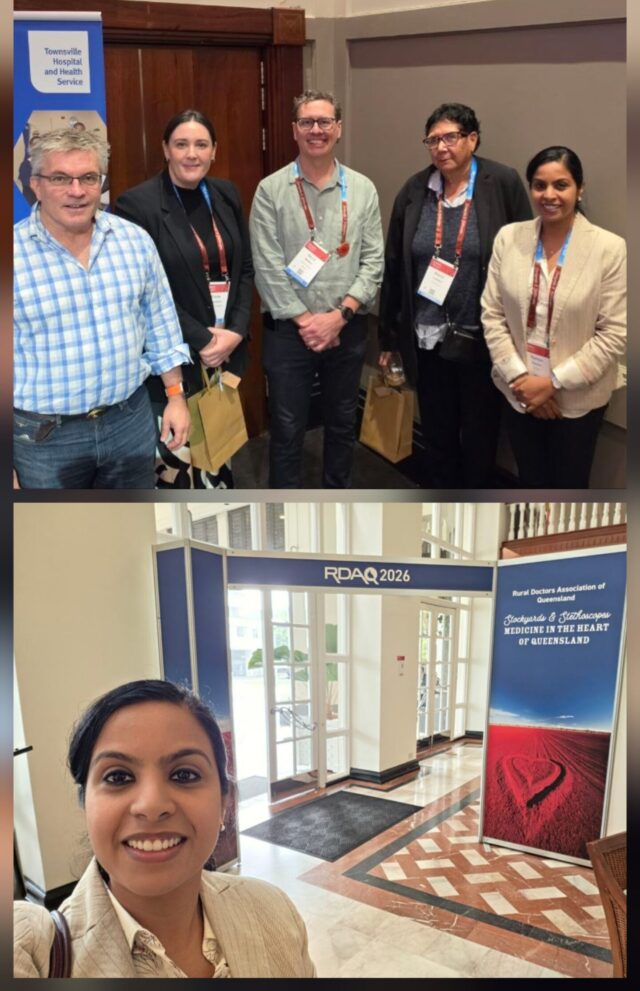
At RDAQ 2026 in Cairns, I had the opportunity to join a thoughtful panel on continuity, community and care, and what the Single Employer Model might teach us. It was great to see a lot of note taking.
 It was a timely discussion, not because the Single Employer Model is the answer to every workforce problem, but because it forces us to confront a question general practice can no longer avoid: how do we make GP training fair, secure and attractive enough for the next generation?
For GP registrars, the issue is very real. Moving from hospital-based training into community general practice should feel like a step toward the specialty they have chosen, not a step into poorer employment security. Yet for many doctors, that transition has historically meant uncertainty around income, leave, parental leave, study leave and employment arrangements.
That is where the Single Employer Model (SEM) has changed the conversation.
Lesson 1: Employment Security Influences Career Choice
At its simplest, SEM means a registrar has one employer across their training placements. In practical terms, it means their salary and entitlements are not reset or disrupted every time they move from one placement to another.
For a registrar planning a family, managing a mortgage, moving between rural towns or simply trying to make a confident career decision, that kind of continuity is not abstract policy. It is the difference between feeling supported and feeling exposed.
We can talk about the value of general practice, the privilege of continuity of care and the importance of rural medicine, but registrars also need to know they can build a life while they train. A profession that wants to attract excellent doctors cannot ask them to accept avoidable insecurity as the price of entry.
This is why recent national reforms are so important. From 2026, the Commonwealth has introduced a $30,000 salary incentive for new GP trainees commencing their first core community-based primary care term, as well as up to five days of study leave per training year and up to 20 weeks of parental leave for eligible primary caregivers.
Those changes address many of the pressures that helped drive SEM in the first place.
Lesson 2: Continuity Means More Than One Employer
In general practice, we often use the word continuity to describe the relationship between a patient and their GP over time. That remains one of the great strengths of our specialty.
But for GP registrars, SEM highlights another kind of continuity: continuity of income, entitlements and support across placements.
Both are important.
A registrar who feels secure is better placed to learn, to commit to a community and to imagine a future in general practice. A practice that is properly supported is better placed to teach, supervise and provide high-quality patient care. A rural community benefits when doctors are not simply passing through, but are given a genuine chance to belong.
That is where the rural context is important. Early SEM experience has been strongly rural, with most participating registrars training in MMM4 to MMM7 locations and many on Rural Generalist pathways. Early signs are encouraging, with a significant proportion of registrars remaining active in SEM roles and many who exit staying in equally or more rural locations.
But we need to be careful in how we interpret those results. Workforce outcomes are rarely caused by one policy lever alone. Retention depends on training quality, supervision, community connection, family support, career pathways, housing, local services, hospital relationships and the viability of the general practices doing the teaching.
Lesson 3: GP Practices Must Be Strong Enough to Train the Future Workforce
This is where GPs, supervisors and practice owners have a vital voice in the debate.
General practices are not just convenient locations for training. They are community businesses, clinical homes, teaching environments and the front door of the health system.
If a model improves conditions for registrars but leaves practices carrying more pressure, more administration or less financial certainty, then it has not solved the problem.
It has shifted the problem.
For SEM to make a lasting contribution, it must strengthen the whole training environment. Registrars need fair conditions. Supervisors need time, recognition and support. Practices need sustainable funding. Rural communities need doctors who can move confidently between hospital and community care without losing sight of what general practice does best.
SEM Is One Option, Not the Whole Answer
The panel reinforced for me that SEM should be seen as one option in a broader workforce strategy, not as a single national solution to be copied everywhere.
In some regions, it may be an excellent fit. In others, the same goals may be better achieved through portable entitlements, nationally consistent registrar supports, stronger supervision funding and better-designed rural pathways.
The real prize is not the label attached to the model.
The real prize is a training system where choosing general practice does not mean choosing uncertainty.
For GP registrars, that means being able to enter the specialty with confidence. For GPs, it means knowing the future workforce is being trained in a way that respects the realities of community practice. For rural patients, it means better continuity of care from doctors who are supported to stay, learn and serve.
Where We Go From Here
The Single Employer Model has made employment security part of the national conversation about GP training. Now we need to take the best of that lesson and apply it wisely.
General practice does not need slogans. It needs practical reform, fair conditions and training models that understand both the aspirations of registrars and the realities of the practices that teach them.
That is how we build a stronger future for GP registrars, for GPs and for the communities who depend on us.
Dr Ramya Raman
