
Pharmacy prescribing power plays are dangerous: why we’re standing up against it
An open letter on pharmacy prescribing
Today, I was proud to stand with the Royal Australian College of General Practitioners and colleagues across the health sector in support of a simple but vital principle: patient safety must come first.
 A new open letter, supported by the RACGP alongside the Council of Presidents of Medical Colleges (CPMC), the Australian College of Nurse Practitioners (ACNP), the Australian Medical Association, Choice Chemist, Choice Aged Care and the Wellness Partners Foundation calls for an evidence-based approach to the expansion of pharmacy prescribing.
It is an important intervention at an important time.
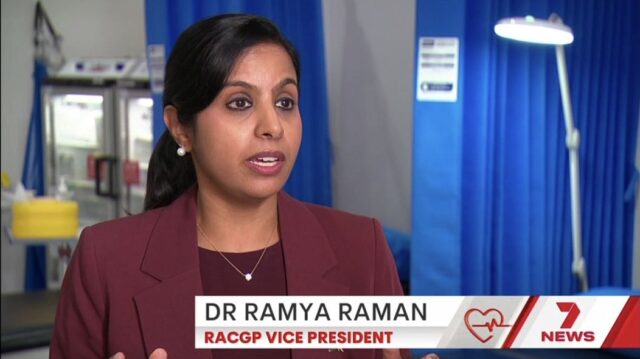
As I said on 7News, This is not a turf war, we are putting patient safety here
The pharmacy lobby has worked hard to present pharmacy prescribing as a simple solution to pressure on the health system. But prescribing is not simple. It is not a retail transaction, and it should never be treated as one.
Prescribing is not just about matching a medicine to a symptom. Safe prescribing depends on clinical assessment, diagnosis, continuity, follow-up and an understanding of the whole patient. It means knowing a person’s medical history, their current medications, their risk factors, their previous reactions, their family history and the wider context of their life.
Often, patients do not present with a clear diagnosis. They present with a symptom. Sometimes that symptom is straightforward. Sometimes it is the first sign of something more serious.
A headache may be a headache, or it may not be. Abdominal pain may be simple, or it may be the start of something urgent. Fatigue, dizziness, chest discomfort, nausea, urinary symptoms or skin changes can all have many possible causes.
This is why prescribing must be grounded in a clinical differential diagnosis approach.
The data from pharmacy prescribing trials should give policymakers pause. In an analysis of Queensland’s pharmacy UTI prescribing model, only 7.3% of patients were referred to a GP or emergency department by the pharmacist, yet 43.2% saw a GP within 28 days of the pharmacy consultation. Almost one in four saw a GP within seven days.
Clinically, that gap is important. It suggests that the need for medical review may be much greater than the referral rate alone shows. A patient may present with what appears to be a simple symptom, receive treatment, and still need follow-up because the symptoms do not settle, the diagnosis was not straightforward, or something more complex is going on.
This is exactly why continuity of care is not a luxury. It is a safety mechanism.
The concern with pharmacy prescribing is not that pharmacists are not valued. Pharmacists are important members of the healthcare team. Patients rely on their advice, their medicines expertise and their accessibility.
But that is very different from creating a parallel prescribing system that risks fragmenting care.
This is especially important for people with chronic disease, older people, children, pregnant women, people taking multiple medications and patients with complex or unclear symptoms. These are the patients most at risk when care becomes disconnected.
Access to care is important. No one disputes that. Australians should be able to get timely, affordable healthcare when they need it.
But access should not come at the expense of safety.
We should be very careful about reforms that are marketed as convenience
We should be very careful about reforms that are marketed as convenience, while shifting more clinical risk onto patients. The answer to pressure on the health system is not to create more disconnected points of care. The answer is to strengthen general practice, improve access to GPs, support team-based care and make sure communication between health professionals is clear and accountable.
This open letter brings together a broad group of voices willing to say what needs to be said: prescribing reform must put patients first, not commercial interests. Representing the profession means speaking up for patients and for the kind of general practice Australians rely on every day: comprehensive, continuous, person-centred care.
It means saying clearly that patient safety must come first.
This is not a turf war. It is a call for responsible reform.
Read: Open letter to Federal and State Health Ministers, AHPRA and the National Boards
